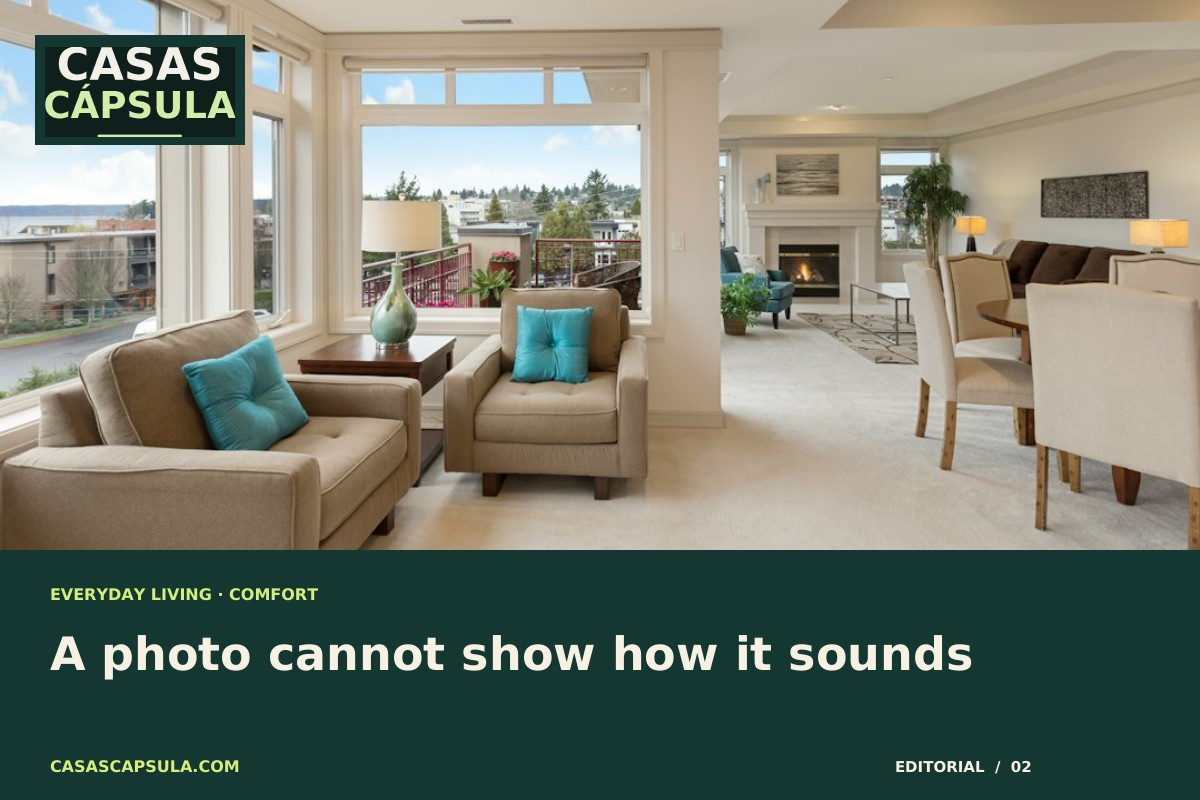
A capsule home can win you over with its windows and disappoint you on the first night if traffic, equipment or conversations interrupt your sleep. Acoustic comfort deserves attention alongside the floor plan. The aim is a solution appropriate to your site and daily routine.
Start outside
Visit the plot at different times. Locate roads, nearby equipment and activities that may change between weekdays and weekends. A demonstration in a quiet factory may not reproduce those surroundings.
Describe how you will use the home. Daytime sleeping, video calls and several occupants create different priorities. Map bedrooms, outdoor equipment and circulation routes.
Ask about the complete assembly
Spain’s official CTE DB-HR application guide addresses sound insulation, acoustic conditioning and noise from building services. The practical buying question is how the whole home is designed, rather than the performance of one panel.
A wall data sheet alone does not describe windows, doors, junctions or workmanship. Ask for the evidence behind any performance claim and the precise construction it covers. Figures from different test methods should not be treated as interchangeable.
Visit with equipment running
Where a demonstration unit is available, ask to operate heating, cooling and other permitted equipment. Listen from the bedroom and work area. Try closing the doors and ask where equipment will sit in your proposed configuration. This is not a substitute for technical verification, but it reveals useful questions.
In a compact home, rooms may be close together. Discuss partitions, doors and simultaneous use. Soft furnishings can change the feeling of reverberation; that is different from ensuring sound insulation between rooms.
Put acoustics into the project before finalising the order. The home that looked right should still feel right when the lights go out.
Continue exploring
Sources
Sources reviewed on 11 October 2026.