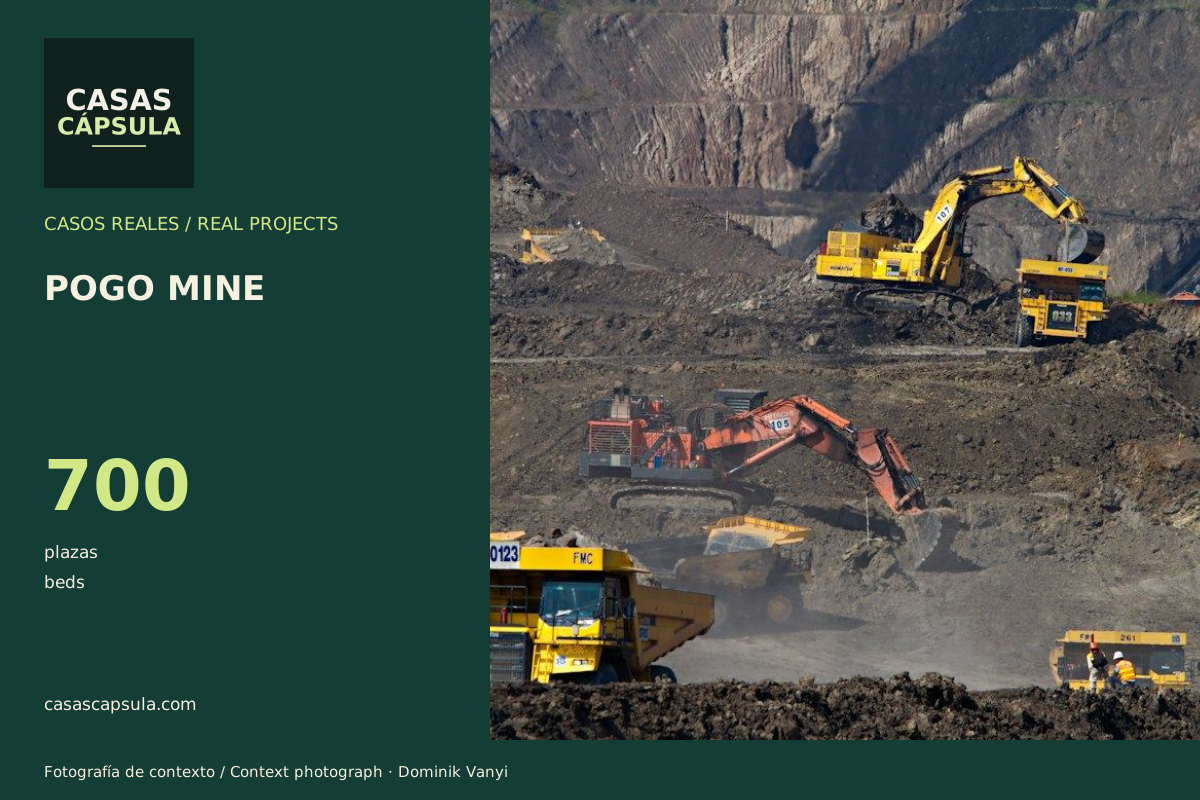
A remote mine needs more than machinery. Worker accommodation is part of the infrastructure required to organise operations. Pogo Mine in Alaska provides a documented example.
700 beds and a lifecycle perspective
ATCO describes 700-bed facilities and equipment installed in the early 2000s. Its service profile covers a 2022–2025 contract and maintenance aimed at extending usable life. We do not assume a later contract renewal.
This is a modular camp, not 700 independent capsule houses or family homes. Beds, rooms and building modules are different quantities when comparing suppliers.
The need it addresses
Our analysis is that locating accommodation in relation to work forms part of remote-operation planning. Decisions need to connect shifts, transport, rest and available services.
Compact units are useful when they support those needs. An attractive capsule without an operating plan cannot replace that infrastructure.
Durability also depends on operation
A developer considering workforce accommodation should compare preventive maintenance, spare parts and fault response. Purchase price is only one component of the cost during use.
Cleaning, meals, water, waste and transport also need clear responsibilities. Those activities can dominate management even when buildings are prefabricated.
Measures for a comparable project
Useful indicators include bed availability, faults, cost per accommodated worker and repair time. These require site- and contract-specific data.
Pogo documents workforce-accommodation scale and the use of modular equipment over time. The reviewed source does not establish a particular saving percentage or productivity improvement. The lesson is that worker housing requires both design and continuing operation.
Explore related guides
Sources and review date
Reviewed on 11 October 2026. Figures are attributed to project promoters or operators; interpretation is our editorial analysis. Unsponsored editorial content.