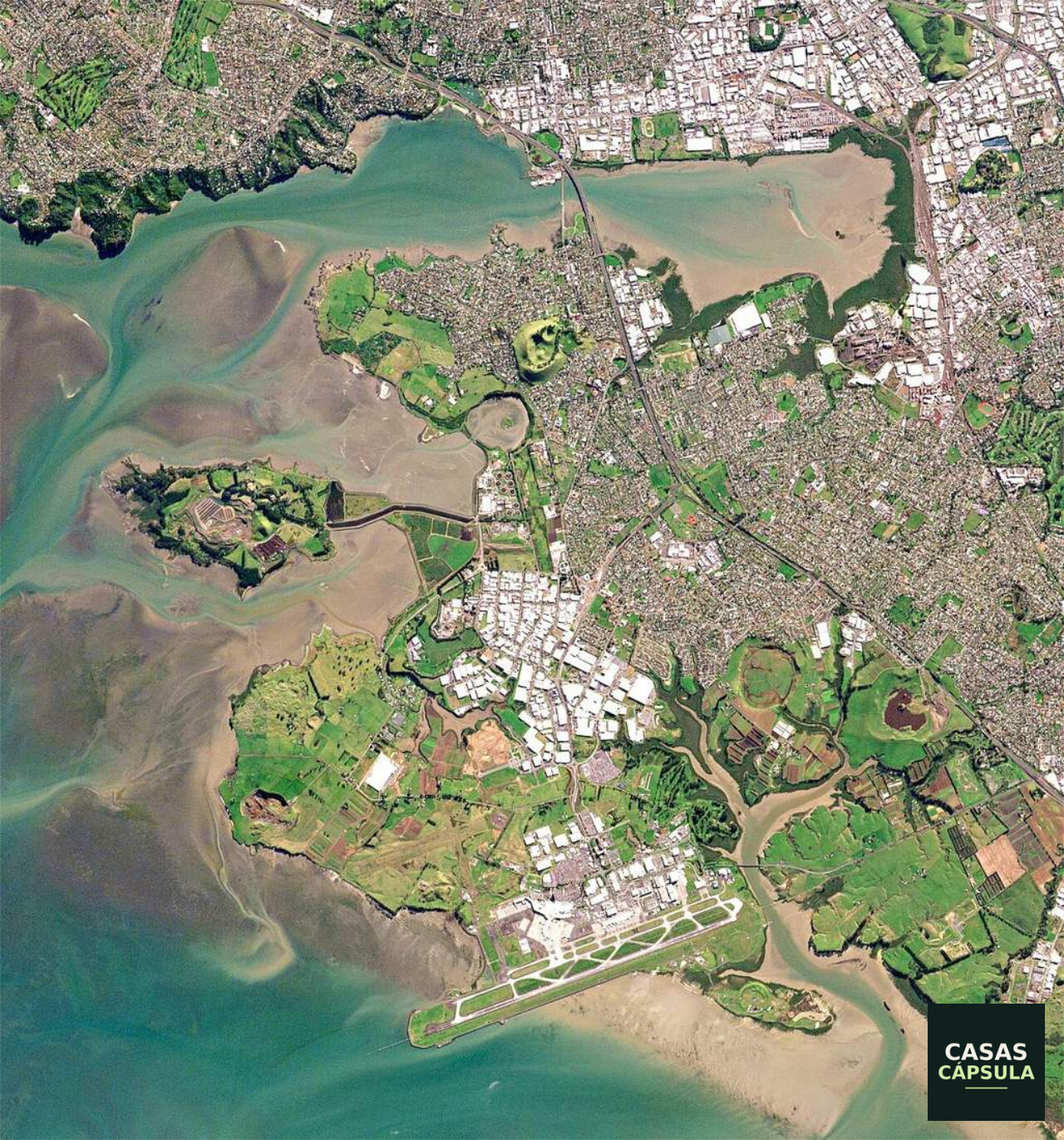
Industrialised construction can form part of a practical response to housing shortages. On 22 April 2021, Kāinga Ora announced the opening of 28 transitional homes in Māngere, New Zealand.
Two sites and two manufacturers
The announcement places 17 homes on Garus Avenue and 11 on Cottingham Crescent. BuiltSmart in Huntly produced the first group; Perry Modular Homes in Cambridge produced the second. Homes were transported from manufacturing sites for installation.
The programme combines accommodation with support to find long-term housing. Penina Trust was identified as manager of Garus Avenue. The need addressed is not only shelter but a supported residential transition.
What makes the case transferable
Our interpretation is that public or social developers must coordinate manufacturing, site delivery and resident support. Modular homes are a tool within that programme; they do not replace land availability or service organisation.
The case helps explain the relationship between a unit supplier and a social operator. A new programme should define duration, household sizes, accessibility, support and maintenance from the outset.
Questions for a public or social organisation
- Which housing problem and population will be served?
- Which land and permissions are available?
- Who manages accommodation and support?
- How will transition to stable housing be assessed?
The 28 homes were a documented delivery in 2021. We do not attribute reintegration rates, healthcare savings or present-day occupancy that the announcement cannot establish.
Source and date
Project stakeholder documentation. 22 abril 2021 / 22 April 2021.
Reviewed 11 October 2026. Interpretation and feasibility questions are CasasCápsula editorial analysis.
Another real case: homes and community at Community First!
Considering a similar project?
Tell us your intended use, location and scale. We also welcome documented manufacturer and operator projects to expand this library of real experiences.